
Last updated on March 1st, 2026 at 06:01 am
Disclaimer: This post contains affiliate links. If you buy through these links, we may earn a small commission at no extra cost to you. As an Amazon Associate, I earn from qualifying purchases.
PWM vs MPPT solar charge controller — which one actually gives you better performance, faster charging, and long-term savings? If you’re building a solar power system, this single decision can impact your battery life, efficiency, and overall return on investment for years.
In this guide, we break down the real differences between a PWM vs MPPT solar charge controller, including how each technology works, where it performs best, and which one makes sense for your specific setup and budget.
We’ve researched, reviewed, and compared the best MPPT and PWM solar charge controllers available in the market. You’ll discover efficiency comparisons, price differences, real-world examples, and expert recommendations to help you confidently choose the right controller for your system.
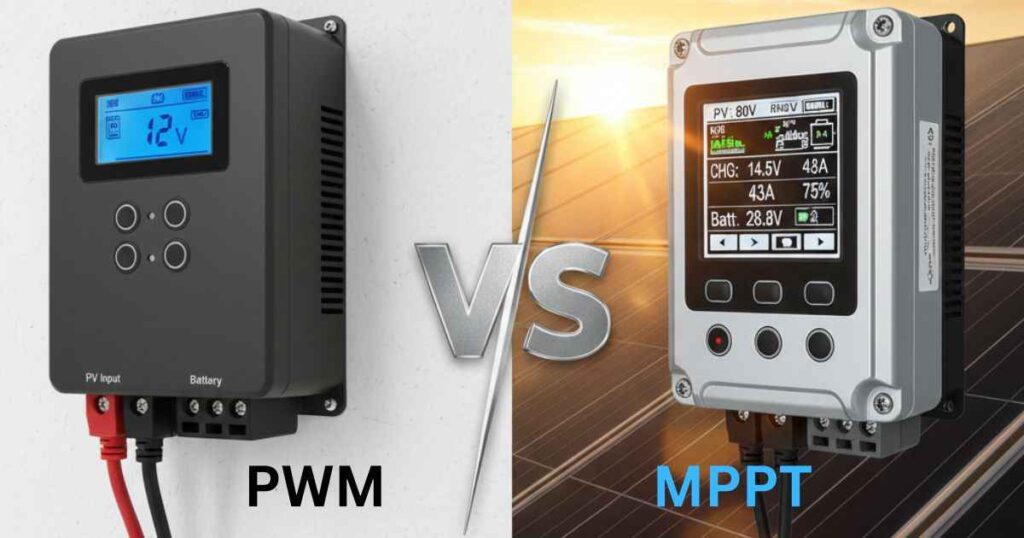
PWM vs MPPT Solar Charge Controller: Key Differences
| Feature | PWM Solar Charge Controller | MPPT Solar Charge Controller |
|---|---|---|
| Full Form | Pulse Width Modulation | Maximum Power Point Tracking |
| Working Principle | Connects panel directly to battery and reduces current gradually | Tracks maximum power point and converts extra voltage into usable current |
| Efficiency | 70–80% | 95–99% |
| Energy Utilization | Wastes excess panel voltage | Converts excess voltage into additional charging amps |
| Cost | Lower, budget-friendly | Higher initial cost |
| System Size Suitability | Small systems (up to ~400W) | Medium to large systems (400W and above) |
| Performance in Cold Weather | Less efficient | Performs very well |
| Panel Voltage Flexibility | Panel voltage must match battery voltage | Can handle higher panel voltage than battery |
| Charging Speed | Slower charging | Faster charging |
| Installation Complexity | Simple | Slightly advanced |
| Best For | Small homes, RVs, basic setups | Home backup, off-grid, lithium systems |

What Is a PWM Solar Charge Controller?
When comparing a PWM vs MPPT solar charge controller, it’s important to first understand what a PWM controller actually does.
A PWM (Pulse Width Modulation) solar charge controller is a simple and cost-effective device that regulates the flow of electricity from your solar panel to your battery. Instead of converting excess voltage into additional usable current, it connects the panel directly to the battery and gradually reduces the charging current as the battery approaches full capacity.
In a PWM vs MPPT solar charge controller comparison, PWM is considered the more basic technology. It helps prevent overcharging, protects battery health, and is ideal for small solar systems where panel voltage closely matches battery voltage.
How PWM Solar Charge Controller Works
When comparing a PWM vs MPPT solar charge controller, understanding how PWM works helps you see where it performs well—and where it falls short.
A PWM (Pulse Width Modulation) controller works by directly connecting the solar panel to the battery through a fast electronic switch. Instead of converting excess voltage into extra current, it simply regulates charging by rapidly turning the connection on and off. This switching happens many times per second.
Here’s the step-by-step process:
- The solar panel sends power to the controller.
- The controller connects the panel directly to the battery.
- The panel voltage drops close to the battery voltage.
- As the battery charges, the controller reduces the charging current by shortening the “on” time of the switch.
Unlike an MPPT unit in a PWM vs MPPT solar charge controller comparison, PWM does not optimize or convert extra voltage into additional amps—it only regulates charging safely and simply.
Pros and Cons of PWM Solar Charge Controller
When comparing a PWM vs MPPT solar charge controller, PWM is the simpler and more budget-friendly option. However, it comes with certain limitations.
✅ Pros of PWM Solar Charge Controller
- Affordable – Lower cost compared to MPPT controllers
- Simple Technology – Easy to install and operate
- Reliable Design – Fewer electronic components mean lower failure risk
- Low Maintenance – Minimal configuration required
- Best for Small Systems – Ideal for small setups (under ~300–400W)
- Good for Warm Climates – Works reasonably well in hot regions
❌ Cons of PWM Solar Charge Controller
- Lower Efficiency (70–80%) – Does not convert excess voltage into usable current
- Energy Loss – Wastes extra panel voltage
- Slower Charging – Especially compared to MPPT
- Limited Panel Compatibility – Panel voltage must closely match battery voltage
- Not Ideal for Large Systems – Performance drops as system size increases
- Poor Cold Weather Performance – Cannot take advantage of higher panel voltage in low temperatures
In short, PWM controllers are best for small, budget solar systems, but for higher efficiency and long-term savings, MPPT usually performs better.
Best PWM Brands to Consider
1. SOLPERK 8A 12V PWM Solar Charge Controller
If you’re comparing a PWM vs MPPT solar charge controller, the SOLPERK 8A 12V model stands out as one of the best solar charge controllers 12V for small systems. It’s built specifically for 12V solar panels and delivers stable, safe charging for LiFePO₄, AGM, and GEL batteries. For RVs, boats, and cars, this compact solar regulator is a reliable choice.
Unlike many basic controllers, this unit is IP67 waterproof, making it perfect for outdoor solar use in rain, dust, or snow. In a mppt vs pwm efficiency comparison, PWM is ideal for smaller setups where panel voltage matches battery voltage. If you understand the difference between pwm and mppt, you’ll know this is a smart budget option.
In a PWM vs MPPT solar charge controller decision, this model offers strong safety protection, zero nighttime battery drain, and an intelligent LED charging indicator. Simple, safe, and solar-focused — exactly what small 12V systems need.
🔑 Key Features
- Type: PWM Solar Charge Controller
- System Voltage: 12V
- Rated Current: 8A
- Max Solar Input: 12V Panel
- Battery Compatibility: LiFePO₄, AGM, GEL, Lead-Acid
- Waterproof Rating: IP67
- Display: Dual LED Indicator
- Protection Features: 6-Layer Safety Protection
- Night Consumption: Zero Battery Drain
- Connector Type: SAE Plug
- Application: RV, Boat, Car, Off-Grid 12V Systems
- Warranty: 1 Year
- Support: Lifetime Technical Assistance
✅ Pros
- 100% waterproof (IP67 rated)
- Supports LiFePO₄, AGM, GEL and lead-acid batteries
- Built-in 6-layer safety protection
⚠️ Cons
- Limited to 12V systems only
- Suitable for small solar setups (8A maximum)
📦 Kit Includes
- 1 × SOLPERK 8A 12V PWM Solar Charge Controller
- 1 × SAE Connector Cable
- 1 × User Manual
- 1 × Warranty Card
2. Renogy 10 Amp 12V/24V PWM Negative Ground Solar Charge Controller
If you’re comparing a PWM vs MPPT solar charge controller, the Renogy Wanderer 10A is one of the best PWM solar charge controllers for small to medium systems. It supports 12V and 24V batteries and uses smart 4-stage charging (Bulk, Boost, Float, Equalization). This improves battery health and boosts solar efficiency without increasing system cost.
When looking at the pwm vs mppt price difference, PWM models like this offer serious value. You get advanced load management, full system protection, negative ground safety, and an informative LCD display. It even includes a USB port for direct device charging, which is perfect for RV and off-grid setups.
In a PWM vs MPPT solar charge controller decision, this model is ideal if your panel voltage matches your battery. It’s compact, low self-consumption (<10mA), and reliable for AGM, Gel, Flooded, and Lithium batteries.
🔑 Key Features
- Controller Type: PWM (Negative Ground)
- Rated Current: 10A
- System Voltage: 12V / 24V Auto Detection
- Charging Stages: 4-Stage (Bulk, Boost, Float, Equalization)
- Battery Compatibility: AGM, Gel, Flooded, Lithium
- Self-Consumption: <10mA
- Display: Backlit LCD Screen
- USB Output: 5V / 2A
- Load Control Modes: Manual / Automatic / Timed
- Communication Port: RS232
- Bluetooth Support: BT-1 Module (Optional)
- Waterproof Rating: IP32
- Design: Compact (5.2 × 3.1 inches)
- Safety Protections: Overcharge, Over-discharge, Short Circuit, Reverse Polarity
✅ Pros
- Smart 4-stage charging for better battery life
- Supports both 12V and 24V systems
- LCD display with USB charging port
⚠️ Cons
- Not ideal for high-voltage solar arrays
- Bluetooth module sold separately
📦 Kit Includes
- 1 × Renogy Wanderer 10A PWM Solar Charge Controller
- 1 × Temperature Sensor
- 1 × User Manual
- Mounting Screws
3. LNEX 30A 12V/24V PWM Solar Charge Controller
If you’re comparing a PWM vs MPPT solar charge controller, the LNEX 30A model is a powerful option for larger 12V/24V solar setups. It uses advanced 6-stage PWM charging to improve battery life and boost solar efficiency by up to 15–30%. For users who want reliable solar performance without paying MPPT prices, this is a smart choice.
This solar charge controller for RV, marine, and off-grid systems features an IP65 waterproof design and a super-slim body. The backlit LCD shows real-time solar current and battery voltage. It also includes a remote temperature sensor for accurate temperature compensation, which improves charging stability.
In a PWM vs MPPT solar charge controller comparison, this unit stands out with multi-layer protection and automatic 12V/24V detection. It supports LiFePO4, AGM, GEL, and more, making it versatile for most solar applications.
🔑 Key Features
- Controller Type: PWM
- Rated Current: 30A
- System Voltage: 12V / 24V Auto Detection
- Charging Technology: 6-Stage Smart PWM
- Battery Compatibility: LiFePO4, LTO, AGM, GEL, Flooded, Calcium, EFB
- Waterproof Rating: IP65
- Display: Backlit LCD Screen
- Temperature Sensor: Remote Temp Sensor Support
- Self-Consumption: Low Power Design
- Equalization: Automatic Every 28 Days
- Protection Features: Overcharge, Over-discharge, Overload, Short Circuit
- Application: RV, Marine, Car, Off-Grid Systems
✅ Pros
- 6-stage smart PWM charging
- IP65 waterproof and outdoor-ready
- Supports 12V/24V with temp sensor
⚠️ Cons
- Slightly larger than basic PWM models
- Not designed for high-voltage solar arrays
📦 Kit Includes
- 1 × LNEX 30A 12V/24V PWM Solar Charge Controller
- 1 × Remote Temperature Sensor
- 1 × User Manual
- Mounting Screws
What Is an MPPT Solar Charge Controller?
When comparing a PWM vs MPPT solar charge controller, MPPT stands for Maximum Power Point Tracking — a smarter and more advanced charging technology. It uses sophisticated electronics to constantly track your solar panel’s maximum power point and extract the highest possible energy throughout the day.
Unlike basic controllers, an MPPT unit acts like a DC-to-DC converter. It takes higher panel voltage and converts that extra voltage into additional charging current. This means more usable amps go into your battery instead of being wasted.
In a PWM vs MPPT solar charge controller comparison, MPPT clearly wins in efficiency. It continuously tracks the power curve, adjusts in real time, and optimizes energy harvest — especially in cold weather or with high-voltage solar panels.
How MPPT Solar Charge Controller Works (Step-by-Step)
When comparing a PWM vs MPPT solar charge controller, the real difference becomes clear in how MPPT operates internally. Here’s the step-by-step process:
- Solar panel generates high-voltage DC power.
- The MPPT controller scans the panel’s voltage and current to find the maximum power point.
- It locks onto the optimal voltage where the panel produces the most watts.
- The controller converts excess voltage into additional charging current using DC-to-DC conversion.
- The optimized current is safely delivered to the battery.
- It continuously adjusts as sunlight and temperature change.
Unlike PWM in a PWM vs MPPT solar charge controller comparison, MPPT does not simply match panel voltage to battery voltage. Instead, it intelligently converts extra voltage into usable amps, maximizing solar energy harvest and charging efficiency.
✅ Pros of MPPT Solar Charge Controller
- Higher efficiency (95–99%)
- Converts excess voltage into usable amps
- Faster battery charging
- Works well in cold climates
- Ideal for high-voltage solar panels
- Best for medium to large systems
- Supports system expansion
❌ Cons of MPPT Solar Charge Controller
- Higher upfront cost
- Slightly more complex installation
- May be unnecessary for very small systems
In a PWM vs MPPT solar charge controller comparison, MPPT is usually the better long-term investment, particularly if you want maximum solar output and improved battery performance.
Best MPPT Brands to Consider
1. LiTime 60A MPPT Solar Charge Controller 12V/24V/36V/48V
If you’re comparing a PWM vs MPPT solar charge controller, the LiTime 60A clearly targets high-performance solar systems. With 99% tracking efficiency and up to 96% peak conversion efficiency, it captures maximum solar power from your panels. That means faster charging and better energy utilization.
Unlike basic controllers in a pwm vs mppt efficiency comparison, this unit supports up to 200V PV input and auto-detects 12V/24V/36V/48V systems. It works perfectly with LiFePO4 and lead-acid batteries. The LCD display, LED indicators, and smart charging modes make monitoring simple.
In a PWM vs MPPT solar charge controller decision, this is one of the best MPPT solar charge controllers for large setups. It can be used as a solar charge controllers 48V setups. With strong heat dissipation, dual cooling, and multiple protections, it’s built for serious solar performance and long-term reliability.
🔑 Key Features
- Controller Type: MPPT
- Rated Current: 60A
- System Voltage: 12V / 24V / 36V / 48V Auto
- Max PV Input Voltage: 200VDC
- Tracking Efficiency: ≥99%
- Peak Conversion Efficiency: Up to 96%
- Battery Compatibility: LiFePO4 & Lead-Acid
- Display: LCD Screen + LED Indicators
- Cooling: Dual Forced Cooling (Fan + Heat Sink)
- Protections: Overload, Over-Voltage, Short Circuit, Over-Temp
- Accessories: Copper Wire Connector
- Application: Large Solar Systems, Home & Off-Grid Setups
✅ Pros
- Very high MPPT tracking efficiency
- Supports multiple system voltages (12–48V)
- Strong cooling and full protection features
⚠️ Cons
- No built-in Bluetooth for wireless monitoring
- Slightly higher cost than basic PWM units
📦 Kit Includes
- 1 × LiTime 60A MPPT Solar Charge Controller
- 1 × Copper Wire Connector
- 1 × User Manual
- Mounting Hardware
2. Victron Energy 50A 12/24V SmartSolar MPPT Solar Charge Controller
If you’re comparing a PWM vs MPPT solar charge controller, the Victron SmartSolar 100V 50A stands in a different league. It uses ultra-fast Maximum Power Point Tracking to extract every watt from your solar panels. Even in partial shade, it maximizes solar output and improves battery life.
In a pwm vs mppt efficiency comparison, Victron’s intelligent charge algorithms clearly outperform basic controllers. Built-in Bluetooth lets you monitor real-time data and 30-day history through the VictronConnect app. It supports 12V and 24V systems, making it ideal for serious solar charge controllers for lithium ion battery.
When deciding between a PWM vs MPPT solar charge controller, this model is perfect for high-performance solar systems. With synchronized charging, smart load output, and advanced battery optimization, it delivers premium solar control and long-term reliability.
🔑 Key Features
- Controller Type: MPPT
- Rated Current: 50A
- Max PV Input Voltage: 100V
- System Voltage: 12V / 24V Auto
- Maximum Power Point Tracking: Ultra-fast MPPT
- Battery Compatibility: Lead-acid & Lithium (via app presets)
- Connectivity: Bluetooth via VictronConnect App
- Monitoring: Real-time and 30-day performance history
- Synchronized Charging: Multiple controllers support
- Intelligent Load Output: Configurable load disconnect
- Display: App-based insights
- Smart Algorithms: Optimized power output
✅ Pros
- Excellent MPPT efficiency and power output
- Bluetooth monitoring with VictronConnect app
- Supports synchronized multi-controller setups
⚠️ Cons
- Higher price point than basic PWM units
- No physical display on the controller itself
📦 Kit Includes
- Victron Energy SmartSolar MPPT Solar Charge Controller (50A)
- Quick-start Guide / User Manual
- Mounting Hardware
- Warranty Information
3. Renogy Solar Charge Controller Rover 40A 12V24V
If you’re comparing a PWM vs MPPT solar charge controller, the Renogy Rover 40A clearly leads for serious solar setups. With 99.9% multi-peak tracking efficiency, it captures maximum power even during shading or cloudy conditions. That means better solar harvesting and faster battery charging.
In a pwm vs mppt efficiency comparison, this MPPT controller handles 12V/24V systems and supports gel, flooded, and lithium batteries. It includes smart temperature compensation, 6kV lightning protection, and advanced 4-stage charging. Perfect for RV, marine, and off-grid systems running inverters for solar panels.
When deciding between a PWM vs MPPT solar charge controller, the Rover 40A stands out with real-time LCD monitoring, 365-day data logging, and optional Bluetooth app control. It even powers DC loads directly, making it a complete solar energy management solution.
🔑 Key Features
- Controller Type: MPPT
- Rated Current: 40A
- System Voltage: 12V / 24V Auto
- Multi-Peak Tracking Efficiency: 99.9%
- Charging Stages: 4-Stage (Bulk/Absorption/ Float/Equalization)
- Battery Compatibility: Gel, Sealed, Flooded, Lithium
- Display: Backlit LCD with Real-Time Monitoring
- Data Logging: 365-Day History
- Protection Features: Lightning, Reverse Polarity, Overload
- Temperature Compensation: Smart -40°F to 149°F Range
- Load Control: Direct DC Load Output & Timer
- Communication: Modbus Protocol (Optional BT-1/BT-2)
- Application: RV, Marine, Off-Grid Systems
✅ Pros
- Extremely high multi-peak MPPT efficiency
- Advanced LCD monitoring and data logging
- Direct DC load output and smart protections
⚠️ Cons
- Bluetooth module sold separately
- Slightly higher price than basic PWM units
📦 Kit Includes
- Renogy Rover 40A MPPT Solar Charge Controller
- User Manual
- Mounting Hardware
- Warranty Card
PWM vs MPPT Solar Charge Controller: Which One Should You Choose?
Choose PWM If:
- Your system is under ~300–400 W
- You’re on a tight budget
- Panel voltage closely matches battery voltage
- You live in a hot climate
Choose MPPT If:
- Your system is above ~400 W
- You want maximum efficiency and power harvest
- You use higher-voltage solar panels
- You want long-term energy savings
- You plan for future system expansion
Final Verdict: PWM vs MPPT Solar Charge Controller
When it comes to PWM vs MPPT solar charge controller, the right choice depends on your system size and long-term goals. If you’re building a small setup and keeping costs low is your priority, PWM gets the job done reliably.
But in a real-world PWM vs MPPT solar charge controller comparison, MPPT clearly delivers higher efficiency, faster charging, and better solar energy utilization. It makes the most out of every ray of sunlight, especially in larger or expandable systems.
For most modern solar setups in 2026, investing in MPPT means better performance today and greater savings tomorrow.
FAQs: PWM vs MPPT Solar Charge Controller
1. What is the main difference between PWM vs MPPT solar charge controller?
The main difference between a PWM vs MPPT solar charge controller is efficiency. PWM matches panel voltage to battery voltage, while MPPT converts excess voltage into additional charging current, resulting in higher efficiency and faster charging.
2. Is MPPT better than PWM for all solar systems?
MPPT is better for medium to large systems, especially above 400W. However, PWM is suitable for small 12V systems where panel voltage matches battery voltage and budget is limited.
3. How much more efficient is MPPT compared to PWM?
In a typical mppt vs pwm efficiency comparison, MPPT controllers are 20–30% more efficient than PWM controllers, particularly in cold weather or with high-voltage solar panels.
4. Is MPPT worth the extra cost?
Yes, for larger systems or long-term use. Although the pwm vs mppt price difference can be noticeable upfront, MPPT usually recovers the cost through better energy harvest and improved battery life.
5. Can I use an MPPT controller with a 12V battery?
Yes. Most MPPT controllers support 12V systems and can also handle higher-voltage panels, making them ideal for flexible and expandable solar setups.